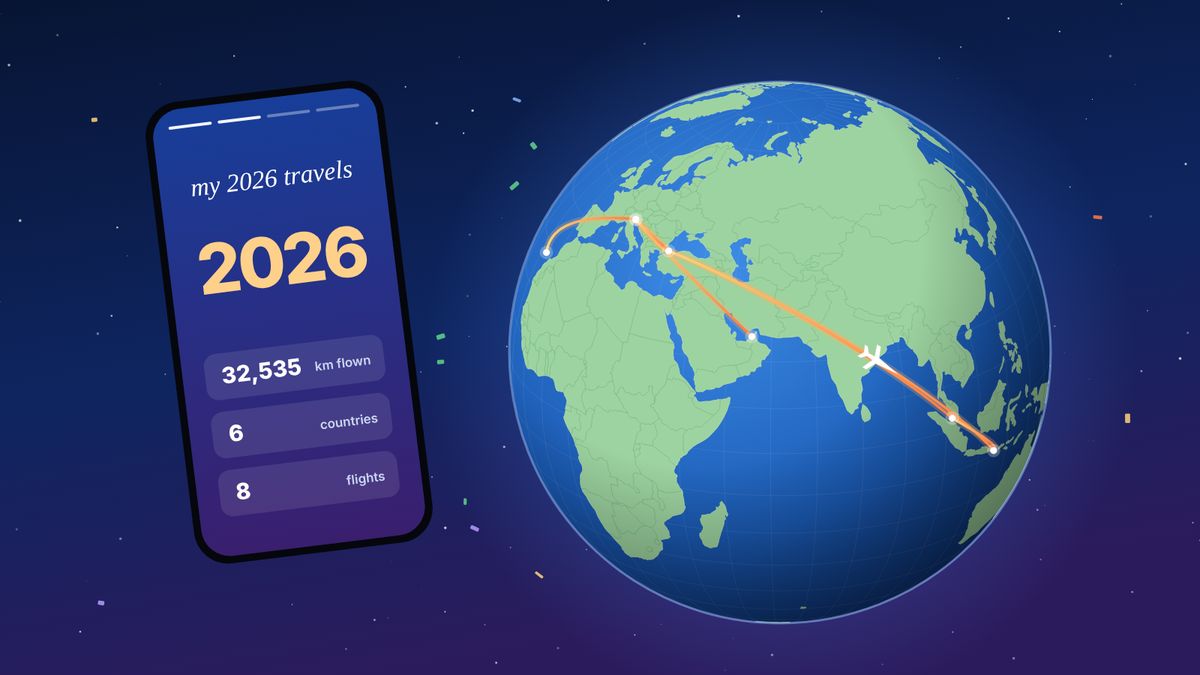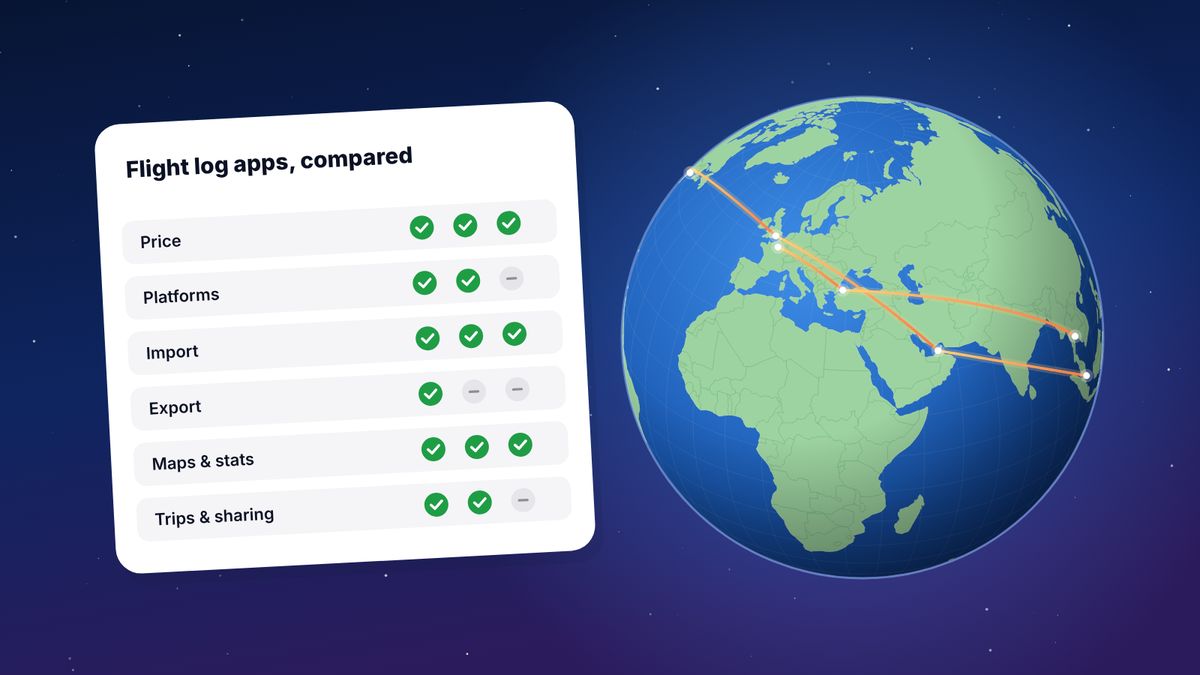
To find out how far you have flown, list every flight you have taken (date, from and to), then add up the great-circle distance between the airports of each one. The quickest way is to add your flights to a free flight log such as flew.world: it fills in each distance, adds up kilometres or miles, hours in the air and countries, and shows how many times you have flown around the Earth. Your email, airline accounts and photos will remind you of most of the flights you have forgotten.
Most frequent travellers have a rough idea: “a few hundred thousand kilometres, probably.” The real number is usually a surprise, in either direction. Counting it properly takes an evening, and once it is done, keeping it up to date takes seconds per flight.
This guide covers where to find your old flights, how flight distance is actually calculated, how to count time in the air and countries, and how to keep the number going.
Step 1: find every flight you have taken
Start with the easy ones and work backwards. You won’t find everything, and that is fine: a log with 95% of your flights is far more interesting than no log at all.
Your email
This is the richest source for anything booked online in the last 15 to 20 years. Search all your inboxes, including old and work accounts, for:
- “boarding pass”, “e-ticket”, “eticket receipt”, “itinerary”, “booking confirmation”, “check-in”
- the names of airlines you have flown and booking sites you have used
- “PNR”, “booking reference” or “record locator”
Sort the results by date and work through year by year. A flight number and a date are enough: the airports, distance and duration can be filled in from those.
Airline and loyalty accounts
Frequent flyer programmes keep a statement of every flight that earned points or status, often going back many years. Log in to each programme you have ever joined and look for “activity”, “statement” or “flight history”. Some let you download it.
Old apps and logs
If you ever used a flight app, it may still have your history. Flighty, myFlightradar24 and OpenFlights can all export your flights as a CSV file, and if you saved your App in the Air export before it closed in 2024, that file still works. All of these can be imported into flew.world in one go.
Photos, calendars and paperwork
- Photos: scroll your camera roll and look for airports, plane windows and the first photo in each new place. Many phones can show photos on a map.
- Calendars: booking apps and travel managers often added flights automatically.
- Paper: old boarding passes, passport stamps, expense reports and bank statements fill gaps from before email.
Can’t remember the exact date of a flight from 2009? Use the date you know best, such as the first day of the trip. The distance doesn’t depend on the date, and your total will be right.
Step 2: understand how flight distance is calculated
When people say how far they have flown, they almost always mean the great-circle distance: the shortest path between two airports over the surface of the Earth. It is the standard used by flight logs, frequent flyer statistics and distance calculators, because it depends only on the two airports, so everyone gets the same number.
Real flights are a little longer. Aircraft follow airways, avoid weather and restricted airspace, and climb and descend in patterns around airports. The difference is usually a few percent. Some programmes and apps use the distance actually flown instead, which is why your airline’s figure may be slightly higher than your flight log’s.
A few examples, as great-circle distances:
| Route | Distance | Typical flight time |
|---|---|---|
| London Heathrow to New York JFK | about 5,540 km (3,440 mi) | 7 to 8 hours |
| Dubai to London Heathrow | about 5,500 km (3,420 mi) | 7 to 8 hours |
| Singapore to Tokyo Haneda | about 5,300 km (3,290 mi) | 6.5 to 7 hours |
| London Heathrow to Sydney | about 17,020 km (10,580 mi), flown with a stop | 22 hours or more with the stop |
You can check any route with the free flight distance calculator, which also shows the route on a globe and estimates the flight time.
Why the line curves on a map
On a globe, the shortest path is straight. Flat maps stretch the world near the poles, so the same path looks bent towards them. That is why a flight from Europe to North America seems to swing north over Greenland: it isn’t a detour, it is the shortest way.
Step 3: count time in the air
Time in the air is the second number people like to know. If you recorded the departure and arrival times, or the flight’s duration, use those. If you didn’t, a fair estimate is the distance at 800 km/h, plus 30 minutes for taxi, take-off and landing. It is close for most jet flights, though winds can make long east-west flights differ by an hour or more.
flew.world uses recorded durations where they exist and this estimate where they don’t, and labels estimated times as estimated so your total is honest.
Step 4: count countries properly
Countries are where totals start arguments. There are two honest ways to count them:
- Countries you stayed in. Changing planes doesn’t count, and neither does coming home. This is what most people mean by “countries I’ve been to”.
- Countries you flew into or through. Every airport counts, connections included. This is the aviation enthusiast’s number, and it is always at least as high.
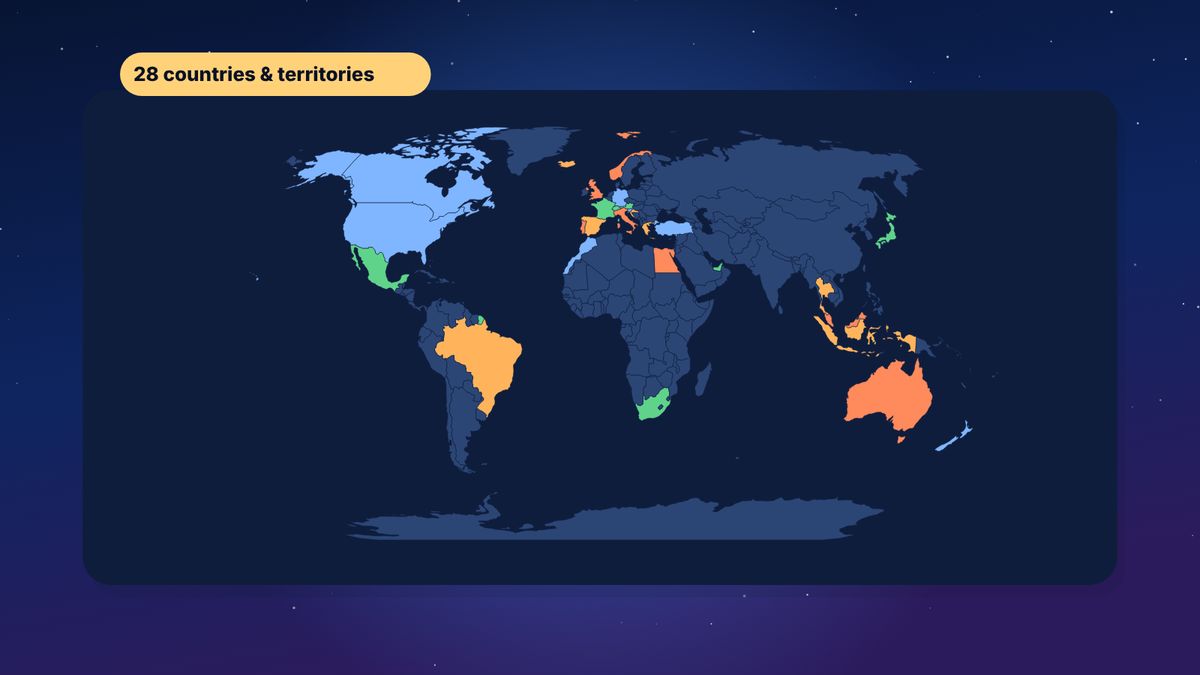
flew.world shows both and says which is which. Territories such as Hong Kong or Puerto Rico are counted on their own. If you want to include countries you reached overland, the countries visited map lets you tick them by hand.
Step 5: see your total
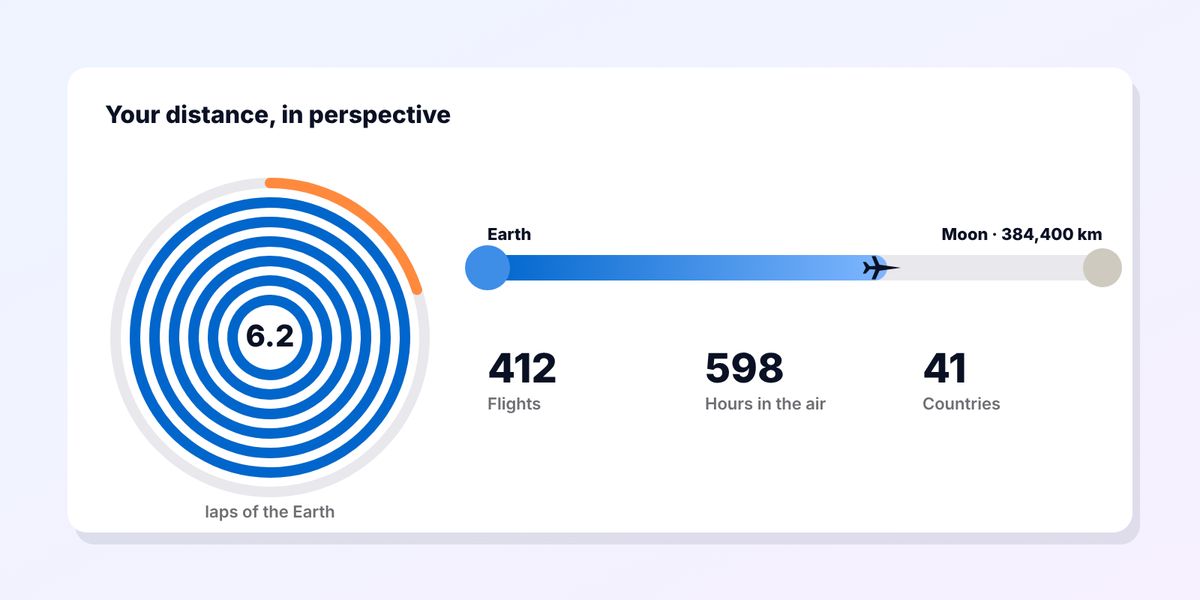
Once your flights are in, the numbers that come out are often the fun part:
- Total distance, in kilometres or miles.
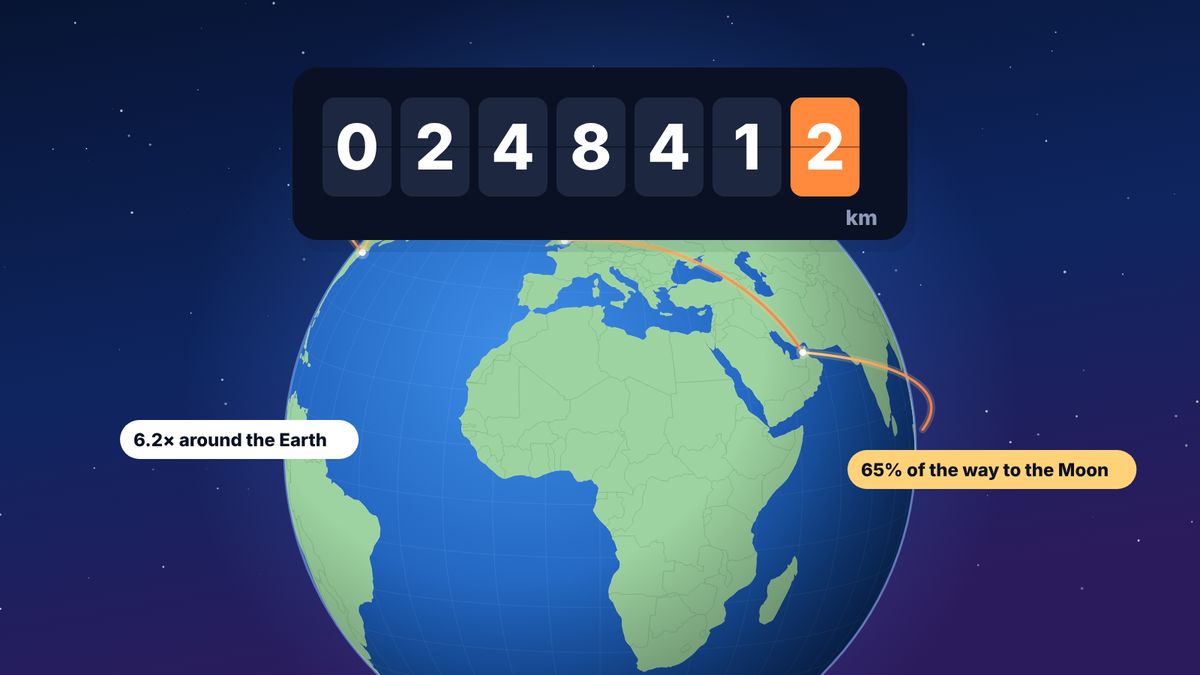
- Laps of the Earth: the Earth’s circumference at the equator is about 40,075 km. Fly 120,000 km and you have been around it three times.
- The way to the Moon: the average distance to the Moon is about 384,400 km. Many frequent flyers get there over a career.
- Time in the air, in hours and days.
- Airports, airlines, aircraft types and countries.
- Records: your longest flight, your shortest, your busiest year.
On flew.world all of these appear on your map as soon as the flights are added, and each year gets its own page, so you can see how your flying has changed over time.
Keep it going
The hard part is the first evening. After that:
- Add each new flight when you book it or when you land. With a flight number and date it takes a few seconds.
- Scan boarding passes as you go; flew.world can read the barcode on a boarding pass photo or file.
- Check your year in December. Your year-in-review page will show what is missing before you share it. See Travel Wrapped 2026.
A note on accuracy
Your total will never be perfect, and it doesn’t need to be. A few forgotten short flights change a lifetime total by very little. What matters is that the method is consistent: same distance formula, same way of counting countries, and estimated times marked as estimated. Then your number is comparable from year to year, and with other people who count the same way.
Questions
How is flight distance calculated?
Flight logs use the great-circle distance: the shortest path between the two airports over the Earth’s surface, using a mean Earth radius of 6,371 km. Actual flown distance is usually a few percent longer.
Why is my airline’s distance different?
Some airlines and programmes use the distance actually flown, or their own route tables, which can be slightly longer than the great-circle distance.
How do I count time in the air without recorded times?
A good estimate is the distance at 800 km/h plus 30 minutes for taxi, take-off and landing. Recorded times are always better when you have them.
Do connections count as countries visited?
It depends on how you count. Most people only count countries they stayed in. flew.world shows both counts: countries stayed in, and every country flown into or through.
How many times around the Earth have I flown?
Divide your total by the Earth’s equatorial circumference, about 40,075 km (24,901 mi). flew.world shows this for you.
Updated 2 November 2026. Spotted something out of date? Tell us at hello@flew.world.